
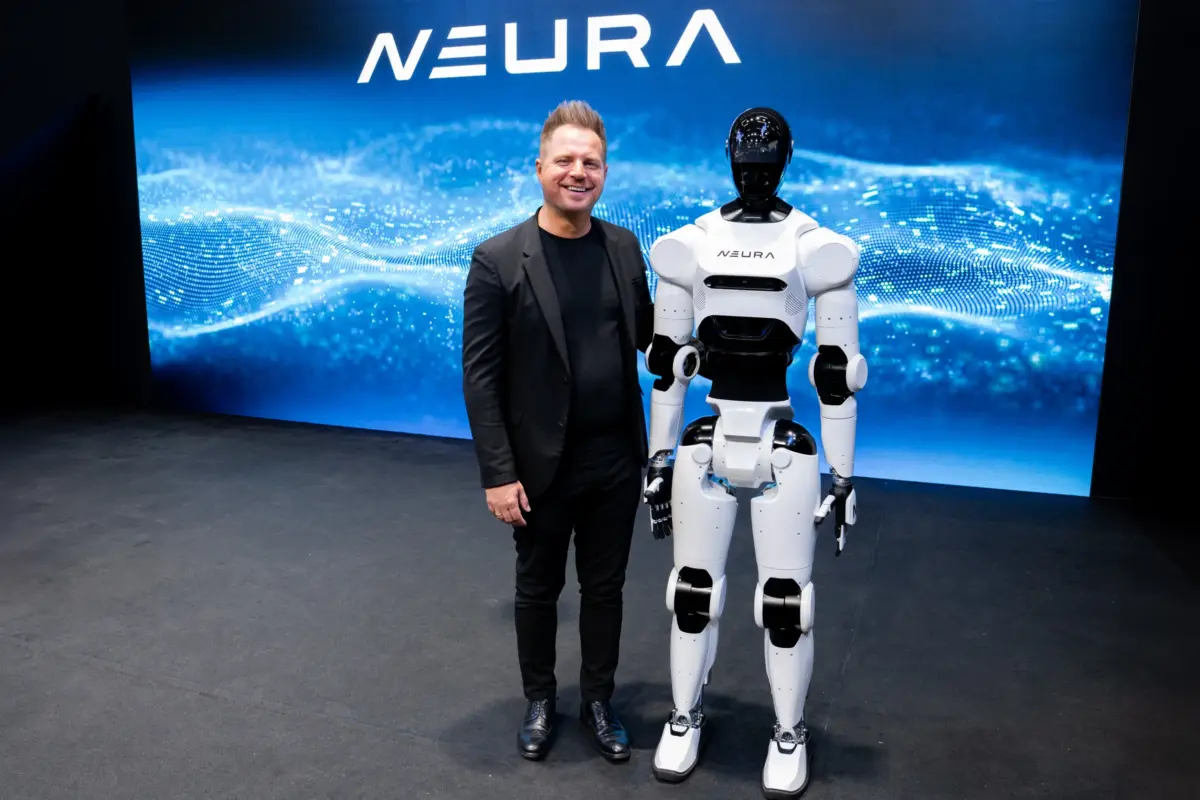
January marked a major milestone for the humanoid robotics sector, as several leading manufacturers unveiled production-ready platforms and next-generation models at CES 2026 and related industry events. Companies including Boston Dynamics, Unitree Robotics, AgiBot, LG Electronics, and NEURA Robotics introduced humanoid systems designed for real-world deployment across manufacturing, logistics, and service environments.
Unlike previous years dominated by experimental prototypes, this wave of launches reflects a broader industry shift toward scalable, commercially viable humanoid platforms. With improved autonomy, simulation-driven training, and cloud integration, these robots are positioned to address labor shortages and operational complexity across multiple sectors.
Boston Dynamics Unveils Production-Ready Atlas:
Boston Dynamics showcased the latest production-ready Atlas humanoid robot at CES 2026, highlighting a fully electric, human-scale bipedal platform designed for industrial environments such as manufacturing, logistics, and material handling. Unlike experimental prototypes of previous years, this version is intended for real-world deployment alongside human workers without requiring significant infrastructure modifications.
Atlas is capable of performing a variety of routine and support tasks, including:
- Palletizing and depalletizing in warehouse settings
- Machine tending and material transfer
- Assembly line assistance
- Visual inspection and quality control
- Workplace data collection and monitoring
The robot integrates stereo and depth cameras, inertial measurement units (IMU), joint torque and position sensors, and advanced onboard computing for AI-driven perception and task execution. Machine learning models, trained in both simulation and real-world testing, allow Atlas to adapt to dynamic environments and improve task performance over time.
Key Specifications Include:
- Form factor: Human-scale bipedal humanoid
- Actuation: High-torque electric joint actuators for full-body mobility
- Sensors: Stereo/depth cameras, IMUs, joint torque and position sensors
- Perception & AI: Onboard computing with machine learning models for environment awareness and task optimization
- Mobility: Dynamic balance and agile locomotion in structured and semi-structured environments
- Power: Rechargeable battery enabling several hours of continuous operation
- Software: Real-time motion control, environment-aware navigation, and cloud connectivity for monitoring and updates
- Deployment: Pilot programs underway with Hyundai and selected industrial partners
Pilot deployments are underway with Hyundai and select industrial partners to evaluate operational reliability, safety, and integration requirements ahead of a broader rollout.
The video provides an early look at Boston Dynamics’ latest Atlas humanoid robot at CES 2026, highlighting its updated design, security features, and industrial-focused capabilities.
Unitree Robotics Expands Its Humanoid Portfolio:
Unitree Robotics expanded its humanoid lineup at CES 2026, introducing the G1, H2, and R1 models for research, enterprise, and early-stage commercial use. The company emphasized modular design, affordability, and standardized hardware to support rapid experimentation and deployment across multiple sectors.
The platforms are built on standardized mechanical and electronic architectures, featuring bipedal mobility, multi-axis joints, and electric actuators. Each robot integrates onboard AI processors, real-time motion controllers, and Linux-based systems with ROS and ROS2 compatibility. Multimodal sensor suites, including RGB and depth cameras, inertial measurement units, joint sensors, and optional lidar, enable navigation, object manipulation, and balance control in structured and semi-structured environments.
Applications Include:
- Robotics research and education
- Human-robot interaction studies
- Locomotion and mobility testing
- Service robotics prototyping
- Light logistics support
The robots are powered by internal rechargeable battery packs, allowing several hours of continuous operation, and feature interchangeable components for flexible deployment. Initial shipments began in early 2026, targeting academic labs, training centers, and enterprise innovation units. Feedback from these early deployments will guide further hardware and software refinements.
Specifications at a Glance:
| Feature | Details |
| Form Factor | Bipedal humanoid |
| Actuation | Electric joint actuators |
| Control System | Real-time embedded controllers |
| Sensors | Vision, depth, IMU, joint sensors |
| Software | Linux, ROS/ROS2 compatible |
| Connectivity | Ethernet, Wi-Fi, cloud support |
| Modularity | Interchangeable components |
| Target Users | Research, enterprise, developers |
Unitree’s approach reflects a broader industry shift toward modular, developer-focused humanoids that are affordable, scalable, and ready for real-world research and light commercial applications.
This video showcases Unitree Robotics humanoid robots, including the G1 performing dance and boxing demos, and the accessible R1 and human-scale H2 platforms for research and education.
AgiBot Introduces A2 Series to Global Markets:
Shanghai-based AgiBot unveiled its A2 Series humanoid robots at CES 2026, marking its global expansion into service and logistics automation. The platforms are designed for commercial environments that require autonomous navigation, task management, and human-robot interaction.
The A2 Series integrates onboard AI processors, vision systems, and cloud-connected fleet management, allowing centralized monitoring, remote updates, and multi-site optimization.
Key Features and Capabilities Include:
- Form factor: Bipedal humanoid suitable for human-scale environments
- Mobility: Autonomous movement in structured and semi-structured spaces
- Sensors: RGB and depth cameras, inertial measurement units, joint sensors, optional lidar
- Perception & AI: Onboard AI for obstacle detection, task execution, and navigation
- Applications: Guest reception and guidance, inventory monitoring, material transport, and customer interaction support
- Power: Rechargeable battery enabling several hours of continuous operation
Early deployments are scheduled for hospitality and logistics settings throughout 2026, allowing AgiBot to evaluate performance, navigation capabilities, and workflow integration. The company emphasized that these trials will inform operational refinements and broader commercial rollout.
NEURA Robotics Reveals 4NE1 Gen 3:
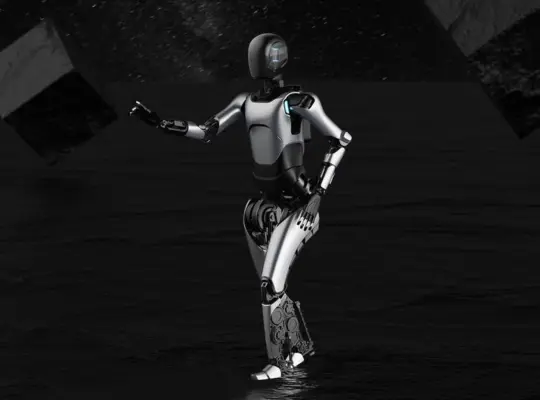
German robotics company NEURA Robotics introduced the third-generation 4NE1 Gen 3 humanoid robot in January 2026, targeting industrial, research, and service environments. The platform is designed for adaptable, autonomous operation alongside human workers and emphasizes human-safe collaboration, environmental perception, and multi-task learning.
Key Specifications and Capabilities:
- Form factor: Bipedal humanoid suitable for human-scale workspaces
- Mobility: Autonomous navigation in structured and semi-structured environments
- Sensors: RGB and depth cameras, lidar, inertial measurement units (IMUs), joint sensors
- Perception & AI: Onboard AI processors with cross-task learning for adaptable skill transfer
- Industrial collaboration: Supports cooperative tasks with humans and machinery
- Digital twin integration: Compatible with NEURA’s Neuraverse ecosystem for monitoring, data sharing, and skill transfer
- Applications: Manufacturing assistance, collaborative research, service robotics, multi-task operations
- Power: Rechargeable battery supporting several hours of continuous operation
The 4NE1 Gen 3 combines onboard AI with cloud connectivity to optimize performance and enable learning across multiple units. NEURA plans pilot deployments in manufacturing and research settings throughout 2026 to evaluate operational reliability, safety, and workflow integration.
The video showcases NEURA Robotics NE1 Gen 3.5 and 4NE1 Mini humanoid robots, highlighting human-like motion, collaborative task performance, and agile operation for research, labs, and real-world environments.
Looking Ahead:
With multiple companies unveiling production-ready humanoid robots in January 2026, the year is set to bring further developments in commercial deployment and research applications. Observers and industry stakeholders will be watching closely as these platforms move into production and reach the market, with ongoing updates expected throughout the year.

5 Cybersecurity Threats in Automated Systems
Cybersecurity challenges continue to be a problem in the industrial automation field. In 2025, 50% [...]
Aug
Robot Operating System 2026: 5 Tips for Buyers
For more than ten years, the Robot Operating System (ROS) has served as the backbone [...]
Aug
Digital Twins in Robotics: 5 Things to Know
Robot digital twins are transforming the way robots are built, programmed, and maintained, and they [...]
Jun

Top 6 CNC Machine Trade Shows 2026
We’re halfway through 2026, and the most important CNC machine trade shows are still ahead. [...]
Jun
What is Time Sensitive Networking?
In modern manufacturing, robots, sensors, and motion control devices must be in total harmony with [...]
1 Comments
May
Torque Ripple in Electric Motors
Electric motors are designed to deliver smooth and continuous rotational motion, but in practice, fluctuations [...]
May