
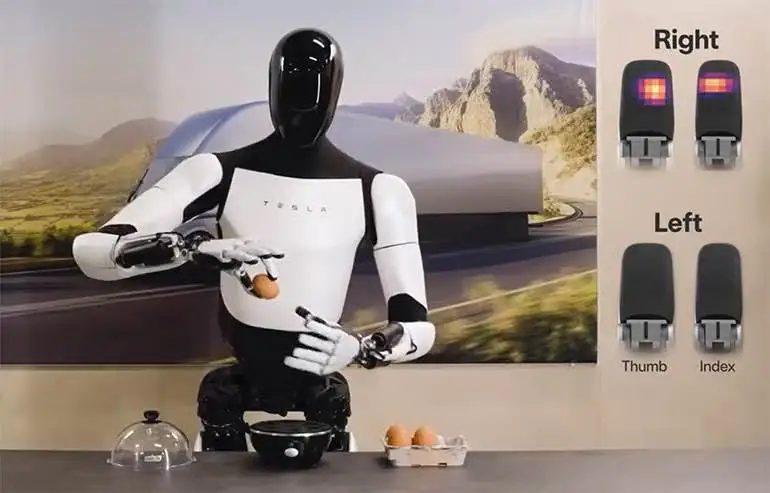
2026 is shaping up to be a breakthrough year for humanoid robots. Several tech giants and robotics startups are preparing to launch their first commercial models, and they’re aiming straight at manufacturing. If you’re looking to improve your production line with more flexibility, these robots might be worth your attention. They’re built to walk, carry, inspect, and even collaborate with human workers. But not all of them will be ready for real-world tasks. In this article, we’ll walk you through the key humanoid robots launching in 2026, what they can do, and how they could (or couldn’t) fit into your operations.
What Are Humanoid Robots?
Humanoid robots are machines designed to look and move like humans. They typically have a head, torso, arms, and legs. Some even mimic facial expressions or hand gestures.
Built to Work Like People:
These robots are designed to navigate spaces built for humans. They can walk on two legs, pick up objects, open doors, or use tools. This makes them ideal for environments like factories or warehouses where traditional automation struggles.
Smart and Adaptable:
Most humanoid robots use cameras, sensors, and AI to understand their surroundings. They can react to changes in real time and learn new tasks through software updates or training. Some are even capable of working alongside human operators.
Why It Matters for You:
If your factory needs more flexibility or struggles with labor shortages, humanoid robots could offer a solution. They can take over repetitive or dangerous tasks while fitting into existing workflows without major reconfiguration.
To learn more about Humanoid Robots, check out this article:
Tesla Optimus: What You Need to Know
Tesla plans to roll out the Optimus humanoid robot for commercial use in 2026. Internal testing started in 2025, mainly inside Tesla factories. [1] The goal is to use Optimus for simple, repetitive tasks before scaling up for external customers.
Specs & Capabilities:
Optimus is built roughly to human scale. It stands about 1.7 meters tall and can carry up to 20–30 kg. It’s expected to cost between $20,000 and $30,000, making it one of the more affordable options in the humanoid space. The robot uses Tesla’s AI and full self-driving software to move and make decisions.
What It Means for Your Factory:
Optimus is designed for tasks like material handling, line feeding, or machine tending. Its mobility lets it work in areas where wheeled robots fall short. If Tesla meets its goals, Optimus could help you reduce labor costs without needing to redesign your current production setup.
Optimus Gen 2 is Tesla’s upgraded humanoid robot with faster walking, improved hands, custom actuators, and a lighter, more agile design.
Xpeng “Iron” Is Coming in 2026:
Xpeng Robotics plans to start mass production of its humanoid robot, called “Iron,” in 2026. [2] The company has already begun trials in a factory setting in Guangzhou to test real-world performance. Their goal is to make Iron ready for industrial environments right out of the gate.
Specs & Features:
Iron stands 1.78 meters tall and includes over 60 joints for smooth and flexible movement. It’s powered by a custom-built AI chip designed for fast decision-making and real-time adaptability. The robot is built with human-safe design in mind, including vision systems and environmental awareness.
What It Means for Your Line:
Iron is expected to take on jobs like material handling, visual inspection, and light assembly. It could be useful for tasks that change often or require human-like dexterity. If you need more agility in your operations, this robot could help without requiring a full system overhaul.
XPENG showcases its latest robots evolving alongside its smart cars, pushing the boundaries of autonomy and intelligent mobility.
Apptronik Apollo Ready for 2026 Launch:
Apptronik is teaming up with global manufacturer Jabil to bring its Apollo humanoid robot to market. The partnership was announced in 2025, with production ramping up for 2026. [3] The focus is clear: get Apollo into real manufacturing and logistics environments fast.
Smart Design, Built for Work:
Apollo is about the size of a human and weighs roughly 70 kilograms. What sets it apart is its “unique actuators” that simplify the design and reduce overall costs. It runs on swappable batteries and can work for about four hours per charge. The robot is made to be modular, so repairs and upgrades are easier.
Why This Matters for You:
Apollo is being built with your factory in mind. It’s scalable, cost-effective, and designed to slot into existing workflows. Whether you’re moving boxes or loading machines, Apollo could offer you a flexible alternative to traditional automation.
Apptronik’s Apollo, first unveiled in 2023, is a human-sized bipedal robot designed for logistics and warehousing, now moving closer to real-world deployment.
GoMate Rolls Out in 2026:
Guangzhou Auto Group is set to begin small-scale production of its humanoid robot, GoMate, in 2026. [4] The robot has already been shown in demo environments and is now being prepared for real industrial use. The company is focusing on automotive and logistics applications.
Unique Mobility & Smart Navigation:
GoMate stands out with its hybrid wheel-and-leg design. It can walk, roll, and balance depending on the environment. This gives it the flexibility to move across factory floors, ramps, or tight spaces. It also uses vision-based autonomy, allowing it to navigate and make decisions without human input.
How It Can Help Your Line:
GoMate is built for inspection tasks, parts delivery, and simple logistics jobs. Its mobility makes it especially useful in large or uneven spaces. If you work in automotive or handle bulky components, GoMate could support your team without needing fixed-path robots or major layout changes.
GAC Group, one of China’s largest automakers, has unveiled a humanoid robot with a unique wheel-leg design, aiming to lead the global robotics market by 2027.
Persona AI Targets 2026 Prototype:
Persona AI, through a joint venture with industrial partners, is working on a humanoid robot designed specifically for shipyards and heavy industry. The team aims to have a working prototype ready by the end of 2026. [5] Development is focused on environments where traditional robots struggle due to scale or complexity.
Built for Tough Jobs:
This humanoid is not made for light-duty work. It is being designed for tasks like welding, grinding, and structural assembly. The robot will feature rugged components, heat resistance, and advanced motion control to handle precision tasks in harsh settings. Its software is being trained to work with common tools and adapt to complex geometries.
What It Means for Your Operation:
If you work in welding, heavy fabrication, or shipbuilding, this robot is worth watching. It could help reduce labor risks, boost productivity, and support skilled workers in safety-critical tasks that require consistency and strength.
Persona AI partners with Hyundai to develop welding-capable humanoid robots, while major AI players unveil new models pushing robotics and perception forward.
The Infrastructure Behind the Robots:
Humanoid robots don’t work in isolation. They need training data, skilled operators, and reliable support. In 2025, several countries, especially China, are investing heavily in robotics infrastructure to make these machines viable at scale.
China Leads the Way:
China is building specialized training centers to prepare technicians and engineers for working with humanoids. At the same time, the country is seeing a sharp rise in robotics patents, many focused on motion control, AI integration, and safety systems. These developments make it easier for manufacturers like you to adopt and maintain new robots.
Long-Term Ecosystems Are Forming:
Initiatives like the K-Humanoid Alliance are also laying the groundwork. While their target is full commercialization by 2028, the efforts starting in 2026 will directly benefit early adopters. [6] Maintenance services, spare part supply chains, and tech support platforms are launching alongside the robots. This means better reliability and lower long-term risk for your operations.
What This Means for You
With multiple humanoid robots hitting the market in 2026, your choices are growing fast. But not every model will fit your line or your goals. Before making a move, take a step back and evaluate the key factors.
Focus on the Right Specs:
Look at each robot’s autonomy level, payload capacity, and supported environments. Check if it fits your existing layout and can work alongside your current equipment. Consider the available maintenance, software updates, and local support. Price will matter, but value over time is more important.
Ask the Right Questions:
Before talking to vendors, prepare. Ask how easily the robot integrates with your systems. What kind of ROI can you expect in six months or a year? Is the software proven, or still experimental? What certifications does it hold for safety and compliance?
Taking time to ask these questions now will save you time and money later.
Conclusion:
2026 is set to be a major turning point for humanoid robots. Companies like Tesla, Xpeng, Apptronik, and others are getting ready to release models built for real industrial tasks. You’ll soon have new options for automating material handling, inspection, and even welding. But not every robot will be the right fit. Look closely at specs, software, integration, and long-term support before making a move. If you plan carefully, a humanoid robot could help you boost productivity without changing your entire setup. Now is the time to start shortlisting, asking vendors questions, and preparing your factory for what’s coming next.
References:
- Reuters. (2024, July 22). Tesla to have humanoid robots for internal use next year, Musk says. Retrieved on 26 June 2025, from https://www.reuters.com/business/autos-transportation/tesla-have-humanoid-robots-internal-use-next-year-musk-says-2024-07-22/
- Robotics and Automation News. (2025, April 17). XPeng to mass produce its humanoid robot next year. Retrieved on 26 June 2025, from https://roboticsandautomationnews.com/2025/04/17/xpeng-to-mass-produce-its-humanoid-robot-next-year/89817/#:~:text=XPeng%2C%20the%20Chinese%20electric%20vehicle,manufacturing%2C%20retail%2C%20and%20healthcare.
- Forbes. (2025, February 28). Robots making robots: Apptronik’s humanoid robots set to “reproduce”. Retrieved on 26 June 2025, from https://www.forbes.com/sites/johnkoetsier/2025/02/28/robots-making-robots-apptroniks-humanoid-robots-set-to–reproduce/
- Nikkei Asia. (n.d.). Chinese carmaker GAC to start production of humanoid robot in 2026. Retrieved on 26 June 2025, from https://asia.nikkei.com/Business/Technology/Chinese-carmaker-GAC-to-start-production-of-humanoid-robot-in-2026
- Houston Chronicle. (n.d.). Persona AI’s humanoid robots aim to support shipyard operations. Retrieved on 26 June 2025, from https://www.houstonchronicle.com/news/houston-texas/trending/article/persona-ai-humanoid-robots-shipyards-20319212.php
- Korea.net. (n.d.). K-Humanoid Alliance to accelerate development of commercial humanoid robots. Retrieved on 26 June 2025, from https://www.korea.net/NewsFocus/Sci-Tech/view?articleId=269677
What is Force Limiting in Cobots?
Collaborative robots, or cobots, operate in shared human workspaces. This capability requires robust safety mechanisms. [...]
Mar
Structured Light vs. Time-of-Flight Cameras
Depth sensing enables robots to perceive the three-dimensional structure of their surroundings. It supports tasks [...]
Mar
Human Machine Interface Explained
If you have automated equipment, you interact with a human machine interface on a daily [...]
Feb
Why Most Humanoid Robots Lack AI Stacks
Humanoid robots are robots built to look and move like humans. They usually have two [...]
Feb
January 2026 Humanoid Robot Launches
January marked a major milestone for the humanoid robotics sector, as several leading manufacturers unveiled [...]
Jan

Top 5 Humanoid Robot Trade Shows 2026
Humanoid robots are multiplying fast. Companies are taking unique approaches to solve real-world problems. In [...]
1 Comments
Jan