
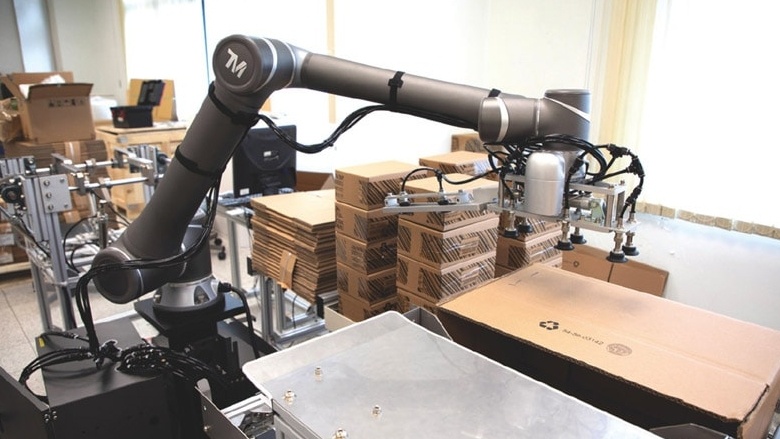
Cobots, or collaborative robots, are designed to work hand-in-hand with humans, they’re making workplaces safer and more efficient across the globe. Whether you’re in manufacturing, healthcare, or even the food industry, there’s a cobot solution that could transform your operations. With their ability to learn and adapt, cobots are not just tools; they’re your future co-workers, ready to tackle a wide range of tasks.
Let’s dive into the proven use cases of cobots and how they can benefit your business today.
What are Cobots?
Cobots are robots that work with you, right where you are. They’re smart enough to avoid getting in your way or causing accidents, thanks to their built-in sensors. You can use them for all sorts of tasks, like putting things together, packing, checking quality, or even in surgeries. They’re super easy to set up to do what you need, making your job safer and faster. Cobots are like helpful teammates, ready to pitch in wherever they’re needed in your workspace.
To learn more about Cobots, check out this article:
Why Use Cobots?
1. Boost Efficiency:
You can rely on a cobot to handle the boring, repetitive tasks. Think of things like part loading, packaging, or screwdriving. These jobs eat up your time and energy. A cobot takes care of them quickly and accurately. That means your team can focus on skilled work instead—like inspection, troubleshooting, or process improvements. You get more done with the same number of people.
2. Easy to Use, Easy to Adapt:
You don’t need to be a robotics engineer to use a cobot. Most models are simple to program and quick to teach. You can reassign them to new tasks in minutes. As your production shifts, your cobot keeps up.
3. Deliver Better Results:
Precision is built in. With repeatable accuracy and smart sensors, your cobot helps improve the consistency and quality of your output—every single shift.
This video showcases how ABB’s collaborative robots support high-speed, precise, and safe automation in automotive assembly and other industries worldwide.
Where Cobots Work Best: Key Industries Using Them Today:
1. Manufacturing:
You’ll find cobots on assembly lines helping with part handling, machine tending, and quality checks. They speed up production, reduce errors, and take over repetitive tasks that slow your team down. Whether it’s automotive, electronics, or plastics—if precision and speed matter, a cobot fits right in.
This video shows how OMRON TM cobots and mobile robots boost flexible production by handling repetitive tasks safely and efficiently across workstations.
2. Healthcare:
Hospitals and labs are turning to cobots to support staff. They assist with lab automation, sterilization, and even handling delicate instruments. That means fewer errors and more time for patient-focused care. In research environments, they help run tests faster and more reliably.
3. Logistics & Warehousing:
Picking, packing, and palletizing are a natural fit for cobots. They move goods without breaks, handle high volumes, and reduce strain on your workers. With tight margins and fast turnarounds, they help keep things moving.
This video highlights a compact, cage-free packaging system using Universal Robots cobots to automate case erecting and packing in tight production spaces.
4. Food & Beverage:
Cobots work well in cold or humid environments. They handle packaging, labeling, and sorting without damaging fragile products. They also meet hygiene standards, helping you maintain product quality.
5. Agriculture:
You can automate planting, sorting, or harvesting jobs. Cobots adapt to outdoor use and handle tasks that require consistency over long hours. They help you save time and reduce labor needs—especially during peak seasons.
These are just some of the industries where cobots are used. As technology keeps getting better, cobots will become even more important in different jobs.
To learn more about Industries that Utilise Cobots, check out this article:
Top Applications Cobots Are Perfect For:
Cobots have a wide range of applications and are being used in various industries to improve efficiency, productivity, and quality. Here are the top 7 applications for cobots:
1. Assembly:
You can rely on cobots to handle precise, repetitive assembly tasks with speed and consistency. Whether it’s tightening screws, applying adhesives, or placing components, they reduce human error and improve output quality. Industries like electronics, automotive, and aerospace benefit the most. With cobots, you can scale production while keeping accuracy high, even during complex builds.
2. Material Handling:
Moving parts from one station to another takes time and effort. Cobots take care of lifting, placing, stacking, and transferring items. They work well in tight or high-traffic areas, where space and safety matter. You reduce worker strain and keep your material flow uninterrupted. That helps you avoid delays and boost productivity without adding staff.
3. Quality Control & Inspection:
Cobots equipped with cameras and sensors can measure, scan, or test products during and after production. They catch small defects that are easy to miss with the human eye. This improves consistency and reduces costly rework or returns. You also get detailed inspection data to help fine-tune your process.
4. Packaging:
From boxing products to sealing, labeling, and sorting, cobots handle packaging tasks reliably. They’re ideal for food, cosmetics, or electronics, anywhere speed and gentle handling matter. You reduce waste, speed up delivery, and keep your packing line flexible for different product sizes or batches.
5. Painting & Finishing:
Applying paint or coatings evenly takes skill. Cobots deliver smooth, consistent coverage every time. You can program them for spray painting, varnishing, or dispensing adhesives. They reduce overspray, material waste, and the need for protective gear. This is useful for furniture, machinery, or auto parts.
6. Welding & Cutting:
Precision welding and cutting are critical for metalwork. Cobots maintain steady motion, ensuring cleaner welds and smoother cuts. They handle tasks like MIG, TIG, or laser welding without fatigue. This reduces the risk of errors and boosts throughput in industries like automotive, metal fabrication, and heavy equipment.
7. Healthcare:
In hospitals and labs, cobots assist with repetitive or delicate tasks like moving samples, preparing medication trays, or supporting rehabilitation. They help reduce the workload on nurses and lab techs while maintaining hygiene and consistency. Some even aid in physical therapy by guiding patient movements safely and gently.
Conclusion:
Cobots are your ultimate work partners, designed to make your job easier and more efficient. They handle the monotonous tasks, allowing you to focus on complex challenges. Easy to program and safe to work alongside, they fit seamlessly into various industries, from manufacturing and healthcare to logistics and agriculture. With cobots, you can boost productivity, save on labor costs, and improve the quality of your work without compromising safety.
Cybersecurity challenges continue to be a problem in the industrial automation field. In 2025, 50% [...] For more than ten years, the Robot Operating System (ROS) has served as the backbone [...] Robot digital twins are transforming the way robots are built, programmed, and maintained, and they [...] We’re halfway through 2026, and the most important CNC machine trade shows are still ahead. [...] In modern manufacturing, robots, sensors, and motion control devices must be in total harmony with [...]
1 Comments Electric motors are designed to deliver smooth and continuous rotational motion, but in practice, fluctuations [...] 
5 Cybersecurity Threats in Automated Systems
Aug
Robot Operating System 2026: 5 Tips for Buyers
Aug
Digital Twins in Robotics: 5 Things to Know
Jun

Top 6 CNC Machine Trade Shows 2026
Jun
What is Time Sensitive Networking?
May

Torque Ripple in Electric Motors
May

Keep up the great work, impressive job!
This article provides a clear guide designed for newcomers to blogging, explaining how to start and manage a blog effectively.