
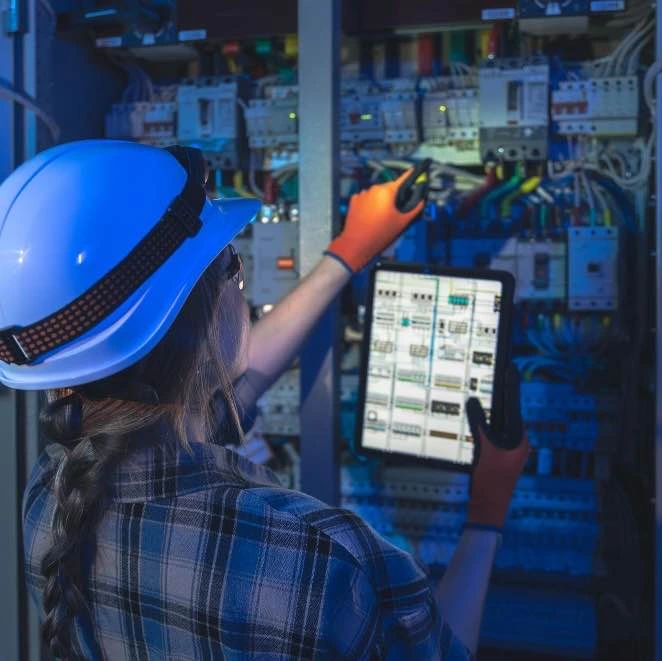
In modern manufacturing, robots, sensors, and motion control devices must be in total harmony with each other; otherwise, milliseconds delay in the flow of data in the network will result in dropped cycles, outages, and downtimes. To address such an issue, Time Sensitive Networking (TSN) was developed as Ethernet standards for ensuring reliable and determinative network communications by the IEEE.
What is Time-Sensitive Networking (TSN)?
Time Sensitive Network (TSN) is a task group within the IEEE 801.1 standard that comprises different Ethernet standards that enable for deterministic communication.[1] It achieves this through reliable message delivery, low latency, and low jitter. TSN is not an entirely new protocol but an enhancement layer built on top of standard Ethernet. In industrial environments where machine coordination depends on microsecond-level timing, standard Ethernet cannot make those guarantees, whereas TSN is designed specifically to do so.
How TSN Works: Three Core Mechanisms
Determinism is assured in TSN with the help of three systems that work interdependently as a whole within the network system.
- Time Synchronisation (IEEE 802.1AS): This would ensure that all devices, such as PLCs, servo drives, and robot controllers, across the network system share a synchronised clock accurate to sub-microseconds levels.[1]
- Traffic Scheduling (IEEE 802.1Qbv): Time-critical traffic are allocated dedicated transmission windows, preventing it from competing with lower-priority and low time-sensitive data.[2]
- Traffic Prioritisation: Relevant automation-critical traffic are prioritised over standard network traffic, ensuring control commands are received without delay.[3]
Together, these three mechanisms deliver the determinism that standard Ethernet cannot provide.
This video gives a quick 100-second introduction to Time-Sensitive Networking (TSN), showing how it enables reliable Ethernet communication and supports industrial networks under IEEE 802.1 standards.
Why Traditional Ethernet is a Problem in Industry
Classic Ethernet was invented for communication but not control. It operates on a best-effort delivery model utilised by Ethernet in which any guarantees regarding packet delivery on time and in proper order cannot be offered; a fundamental problem in industrial environments.
The requirements are for cycle times below one millisecond with very low jitter for synchronisation purposes, according to ACM Computing Surveys.[4] Under high network load, standard Ethernet cannot meet these requirements, resulting in late messages, missed cycles and drive/controller desynchronisation.
TSN vs Traditional Industrial Ethernet Protocols
To address these limitations, factories adopted proprietary industrial Ethernet technologies like EtherCAT, PROFINET IRT, or Ethernet/IP. Each of these systems addressed timing issues but at the cost of vendor lock-in and lack of interoperability.[2]
These protocols each handle the problem of time synchronization via its own solution based on specific hardware and proprietary tools, as well as interoperability between various types of protocols.
In contrast to its counterparts, TSN employs generic Ethernet technology and is based on open standards established by IEEE, hence, possessing innate vendor neutrality.[4]
Although proprietary protocols might prove more advantageous than TSN for existing systems, special processing technologies in EtherCAT ensure extremely low latencies, whereas the use of TSN is complicated in a PROFINET IRT network due to its integration with Siemens, overall making TSN adoption more complex in either environment.[5]
| Technology | Deterministic | Ethernet-Based | Real-Time Capable | Notes |
| EtherCAT | Yes | Yes | Excellent | Specialized protocol |
| PROFINET IRT | Yes | Yes | Excellent | Siemens ecosystem |
| Ethernet/IP | Partial | Yes | Moderate | Common in North America |
| TSN | Yes | Yes | Excellent | Ethernet enhancement layer |
Where TSN Makes the Most Sense in Industrial Automation
TSN is best positioned as a foundation for new networks rather than a direct replacement for established protocols.
- Greenfield Industry 4.0: New facility builds offer the clearest case for TSN. Using a single physical network to merge both IT and OT traffic, provides a direct connection between the production floor and MES and ERP systems.[6]
- Robotics and Multi-Axis Motion Control: Synchronising servo drives and collaborative robots demands high-speed, precise communication. TSN enables multi-axis motion control across a single network, eliminating the need for separate cabling per machine.[6]
- Industrial Manufacturing: Plants running equipment from multiple vendors, Siemens, Rockwell, and Mitsubishi, historically required separate networks per system. TSN enables these to converge onto a single network infrastructure.[7]
- TSN with 5G: Combined with 5G, TSN extends deterministic communication to wireless environments, enabling untethered motion control.[6]
Challenges and Adoption Barriers
On a technical level, TSN has its strengths, but implementation and deployment are not straightforward.
- Cost of Brownfield Deployment: Retrofitted production lines pose a significant cost barrier. Current fieldbus and industrial Ethernet installations lack TSN capabilities and would require substantial hardware investment to upgrade.[4]
- Limited PLC Support: Not all PLCs and motion controllers support TSN technology. Rockwell Automation has suggested that TSN is best deployed where existing technology are inadequate, rather than being implemented in place of already functioning systems.[8]
- Complex Configuration: TSN requires precise coordination across every networked device. Synchronisation, scheduling, and traffic control must all be configured collectively, a single misconfigured device is enough to break deterministic behaviour.[4]
- Inconsistent Ecosystem: The growing number of TSN-compatible products has not yet translated into consistent interoperability. Before deployment, verifying TSN compliance across all controllers and drives is essential.[8]
Conclusion
TSN is a mature, standardised solution backed by the IEEE, IEC, and major automation vendors. For engineers designing new networks or modernising existing ones, it offers something proprietary protocols cannot, determinism without vendor lock-in. Brownfield facilities running EtherCAT or PROFINET have no immediate need to migrate, but for greenfield projects and multi-vendor motion control environments, TSN is worth serious consideration.
References
- IEEE 802.1 TSN Task Group. (n.d.). Time-Sensitive Networking Task Group. Retrieved May 22, 2026, from https://1.ieee802.org/tsn/
- NI. (n.d.). Time-Sensitive Networking (TSN) FAQ. Retrieved May 22, 2026, from https://www.ni.com/
- Craciunas et al. (2017). Scheduling Real-Time Communication in IEEE 802.1Qbv Time Sensitive Networks. Retrieved May 22, 2026, from https://arxiv.org/abs/1712.02246
- Zhang et al. (2024). Time-Sensitive Networking for Industrial Automation: A Survey. ACM Computing Surveys. Retrieved May 22, 2026, from https://dl.acm.org/doi/10.1145/3695248
- HMS Networks. (n.d.). Industrial Networking and TSN Technology Blog Articles. Retrieved May 22, 2026, from https://www.hms-networks.com/
- IEC/IEEE 60802. (n.d.). TSN Profile for Industrial Automation. Retrieved May 22, 2026, from https://1.ieee802.org/tsn/iec-ieee-60802/
- IIoT World. (2025). ARC Industry Forum 2025: TSN and Industrial Networking Discussions. Retrieved May 22, 2026, from https://iiot-world.com/
- Industrial Ethernet Book. (n.d.). Industrial Ethernet and TSN Industry Publications. Retrieved May 22, 2026, from https://issuu.com/iebmedia
End-of-arm tooling transforms generic robots into specialized tools
by Jeremy Cook, contributor to GlobalSpec Industrial robot arms – whether six-axis, SCARA, delta or [...]
5 Cybersecurity Threats in Automated Systems
Cybersecurity challenges continue to be a problem in the industrial automation field. In 2025, 50% [...]
Aug
Robot Operating System 2026: 5 Tips for Buyers
For more than ten years, the Robot Operating System (ROS) has served as the backbone [...]
Aug
Digital Twins in Robotics: 5 Things to Know
Robot digital twins are transforming the way robots are built, programmed, and maintained, and they [...]
Jun

Top 6 CNC Machine Trade Shows 2026
We’re halfway through 2026, and the most important CNC machine trade shows are still ahead. [...]
Jun
What is Time Sensitive Networking?
In modern manufacturing, robots, sensors, and motion control devices must be in total harmony with [...]
1 Comments
May

The breakdown of synchronization, scheduling, and prioritization makes it clear why TSN is more of an evolution of Ethernet than a replacement. One challenge I see in real-world deployments is balancing legacy equipment with the strict timing requirements TSN introduces—it would be interesting to hear more about how manufacturers handle mixed environments.